Year 3 · Public interior / Rural renewal / 02
Advanced Spatial Design
The Hollow Village
A public room for a depopulating mountain village
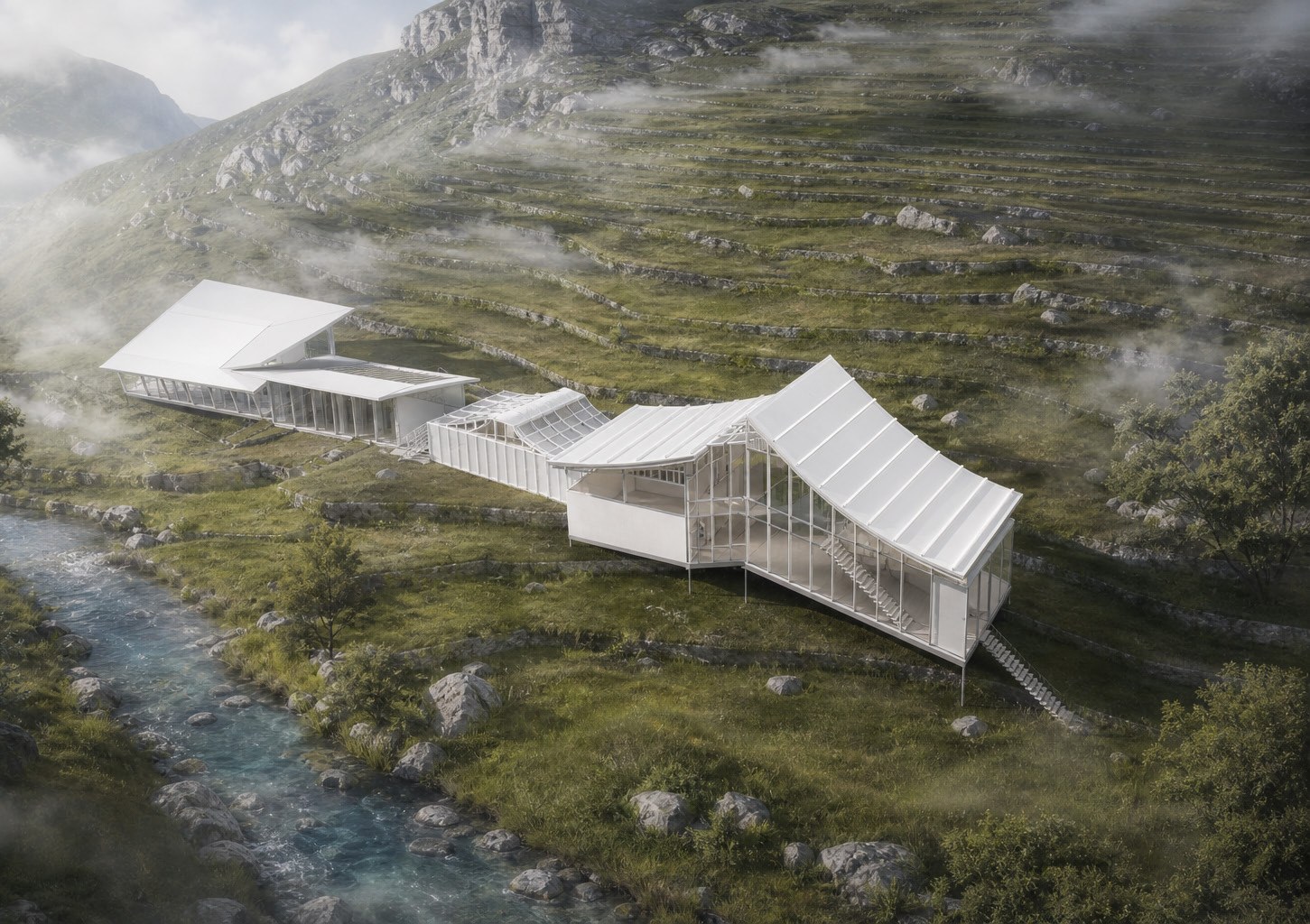
A public renovation for a depopulating mountain village in northern Guangdong, built around cold springs, bamboo and Chinese herbal medicine.
Context
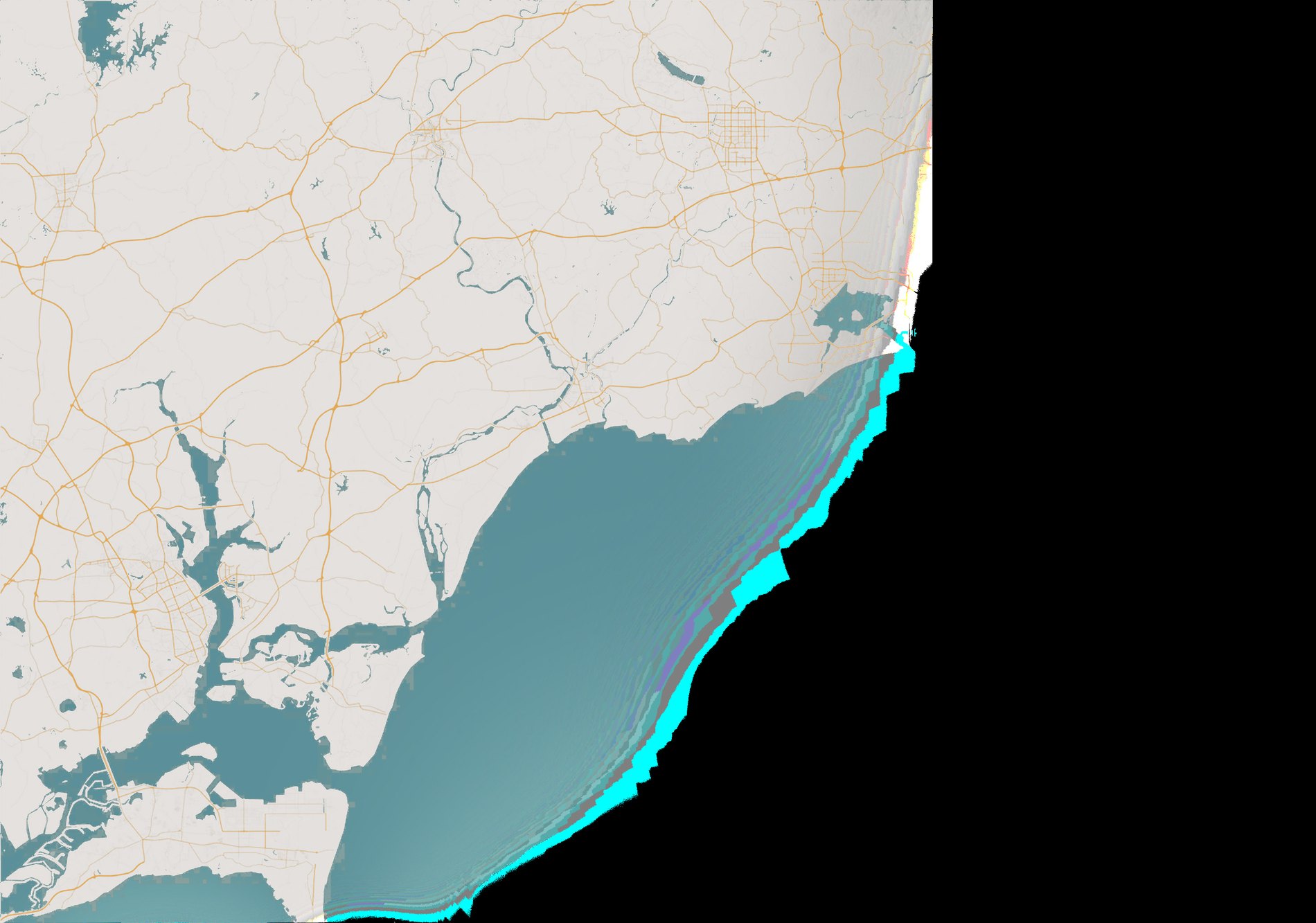
Fuzhulong is a linear settlement in a narrow valley, connected to the city by a single mountain road. Younger residents are leaving; the remaining population is older, and public functions are thinning out. The village still holds dense bamboo forest, cold springs and a living culture of herb collection, drying and grinding.
Area B sits between the mountain and the settlement: a loose edge with no clear public programme. It is the first thing you meet when you enter the village, but it does not yet behave like a threshold.
Question
How can public architecture support everyday life without turning a village into a stage for visitors?
Response
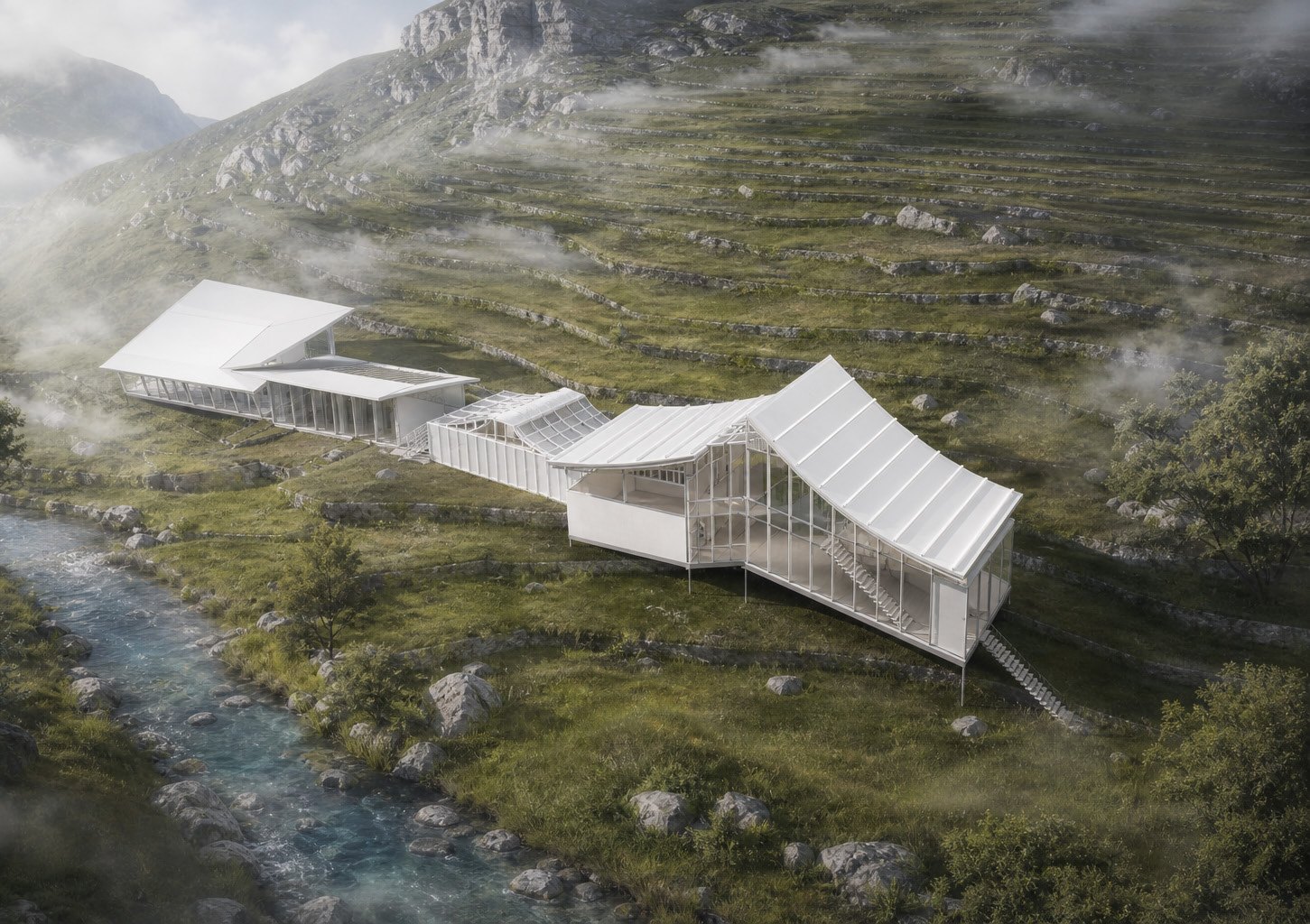
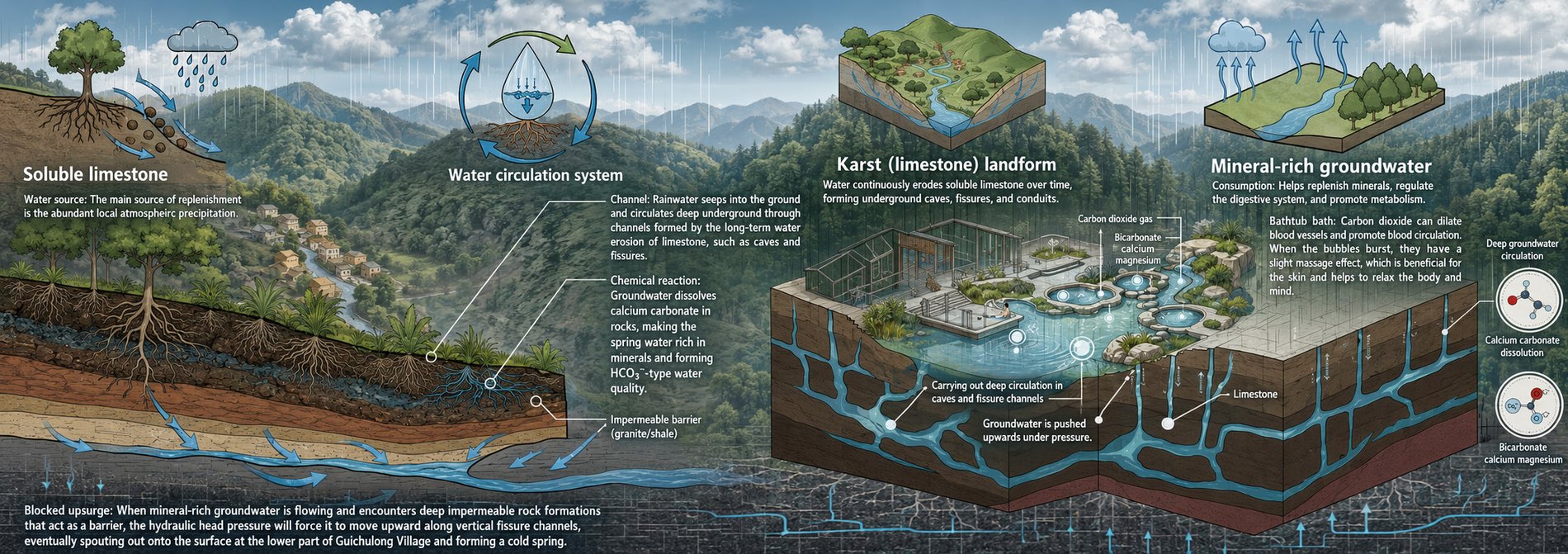
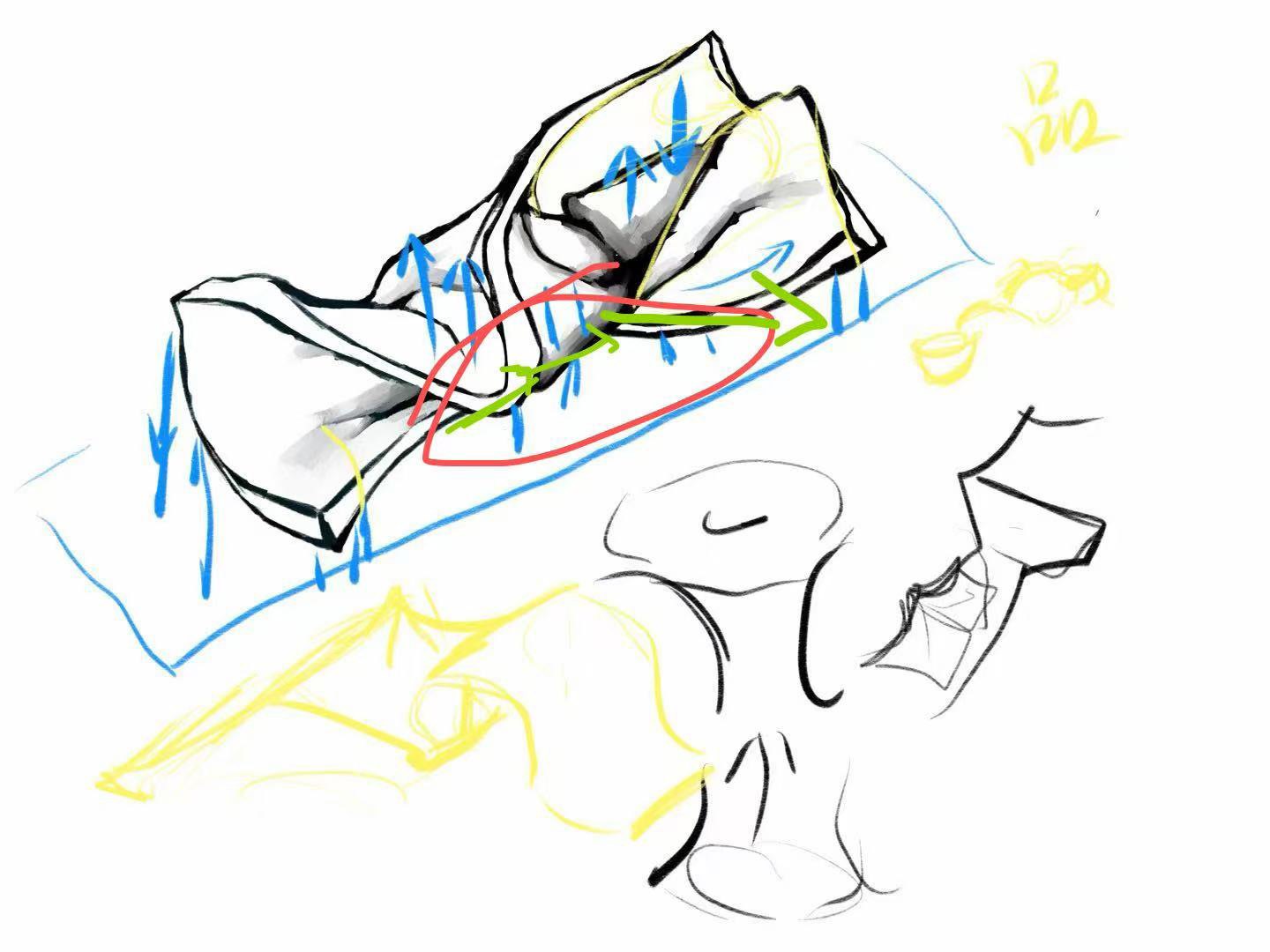
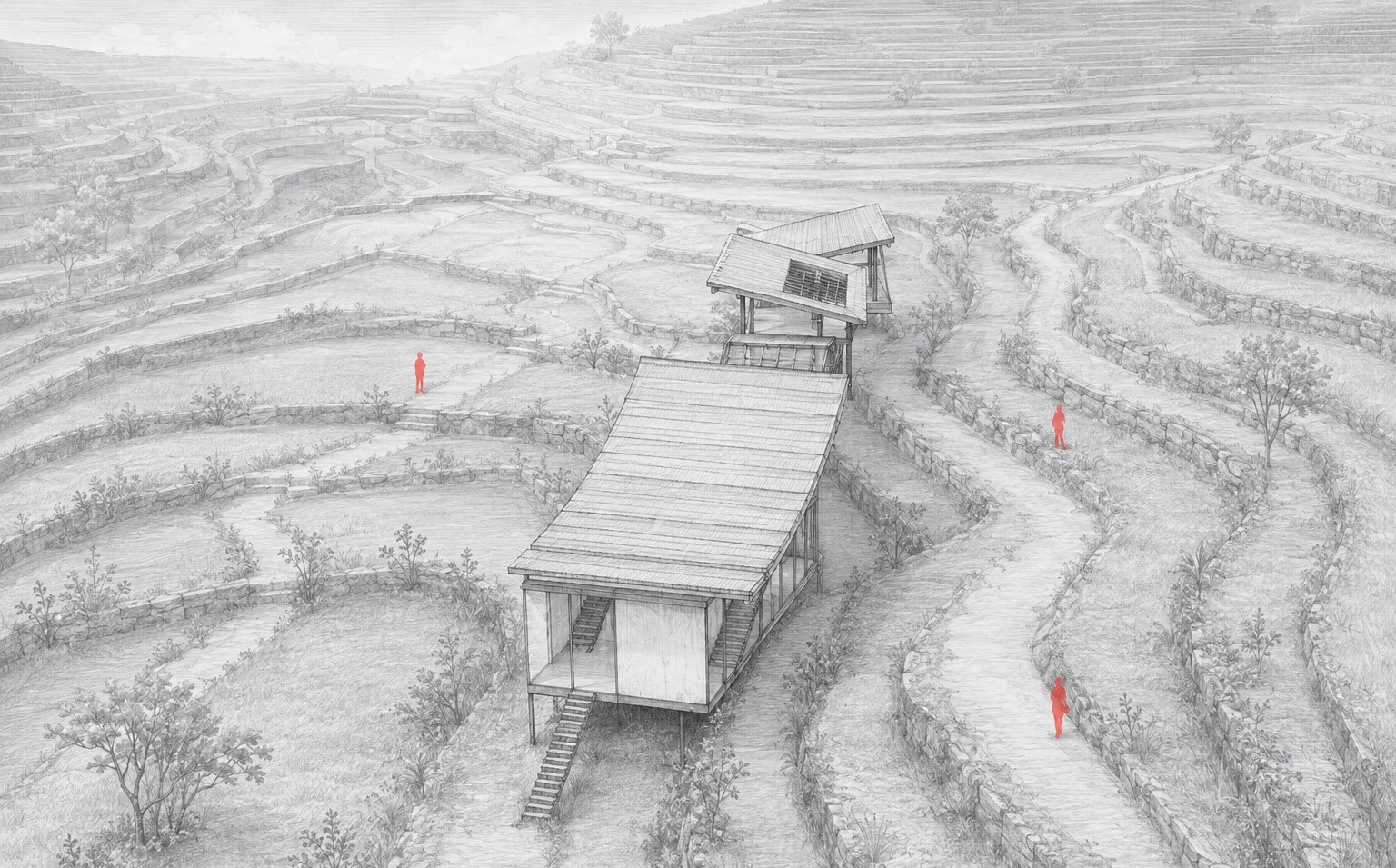
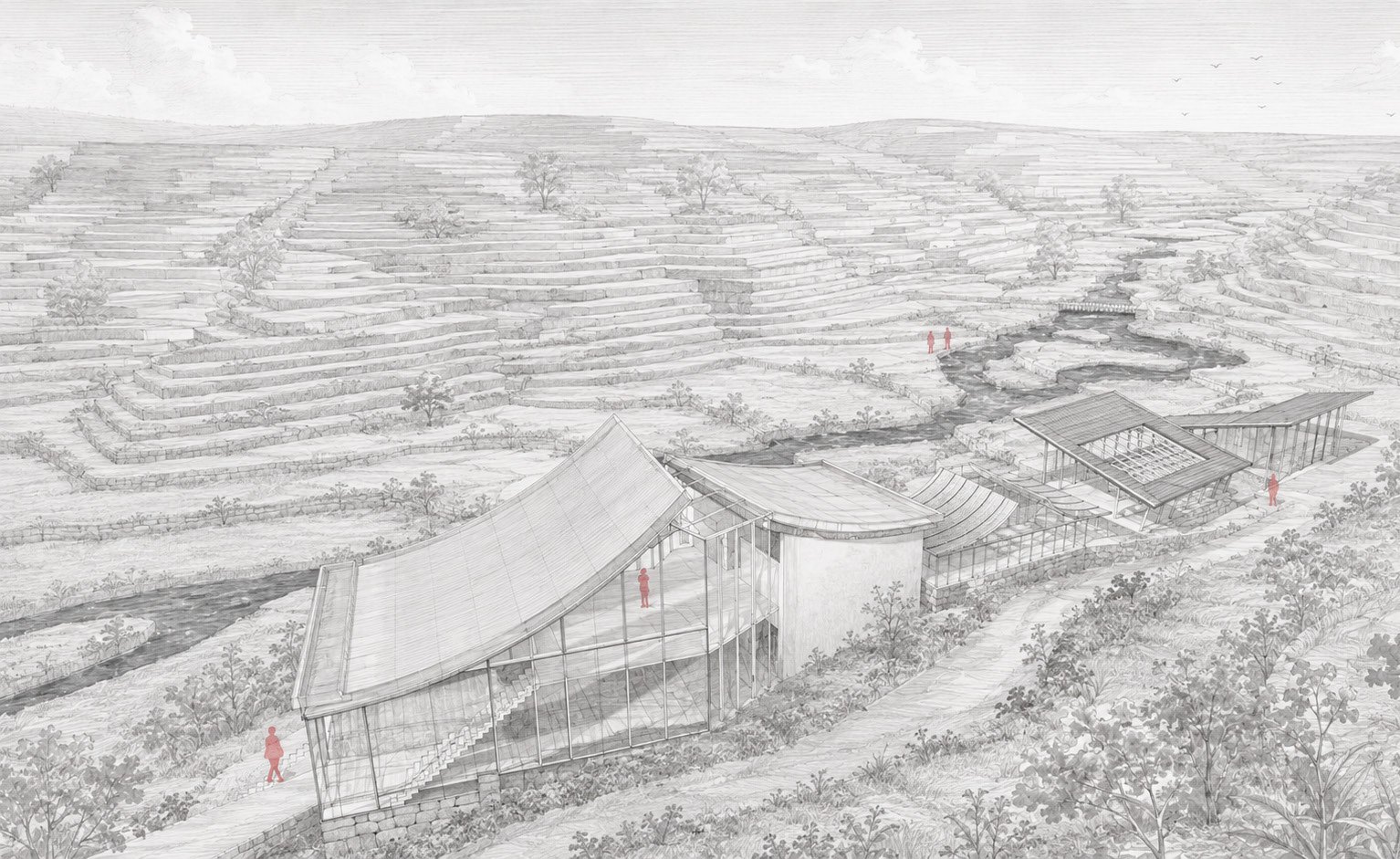
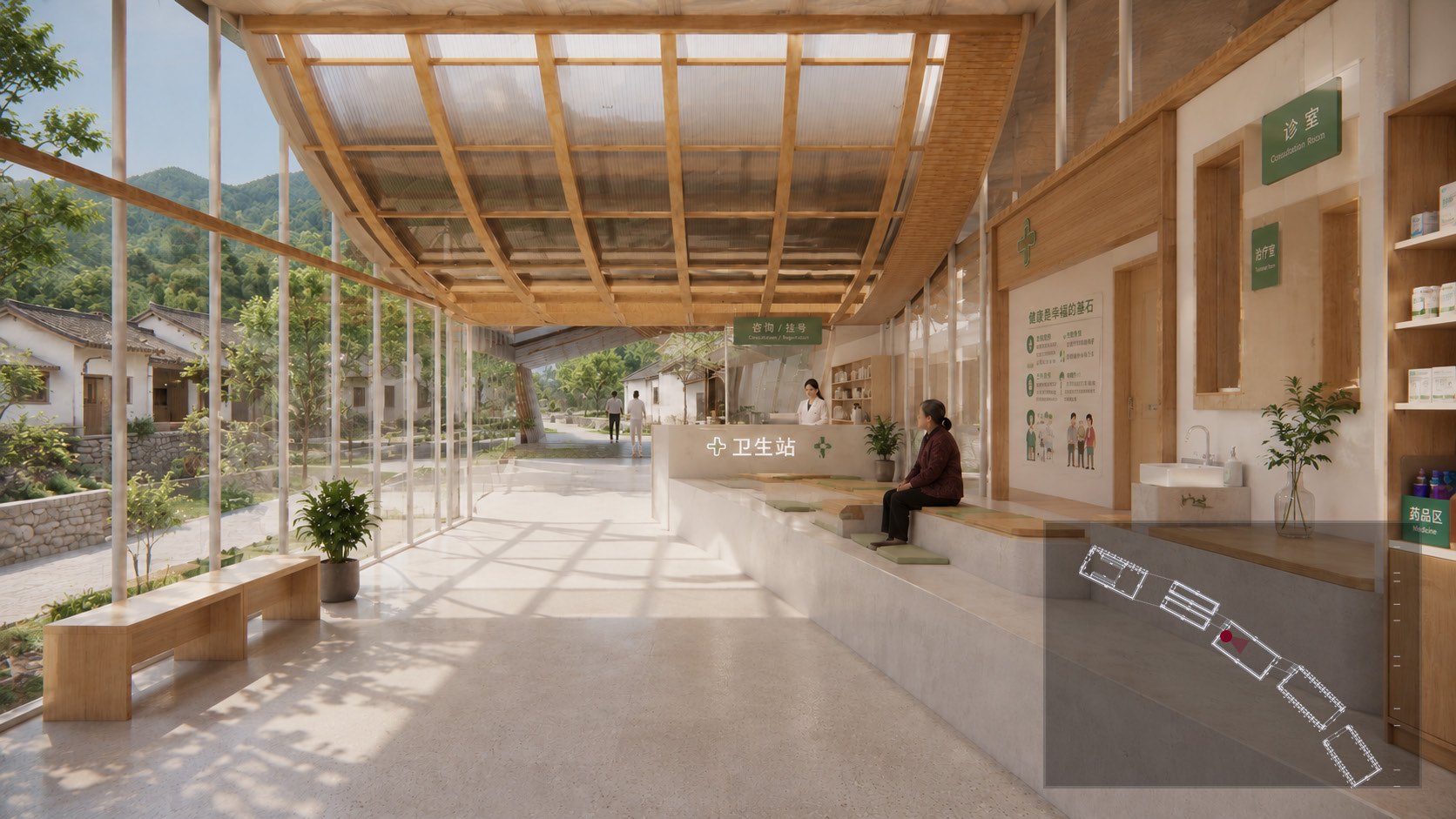
The proposal stitches a series of small existing structures into one continuous terraced public node: lecture room, health station, herb drying and grinding, toilets, workshop. A light steel and glass corridor negotiates the slope; a long curved roof gathers the fragments into a single public room. The roof lifts where the cold spring emerges, registering the pressure and release that produced the spring.
The architecture stays low. It uses the scale of the village, the line of the mountain and the texture of bamboo and timber rather than a new object language. Publicness is treated as infrastructure: a place to dry herbs, see a doctor, meet and pass through.
Outcome
The final drawings and renders describe a new public edge for the village: present but not dominant, continuous but not sealed. The project argues that rural renewal can begin with the ordinary rooms a community needs every day.
The roof lifts where the spring emerges — a small architecture of pressure and release.